Residential & Commercial Evictions | You are represented at all times by one of our California Eviction Attorneys | 1-800-686-8686 | intake@fastevict.com | Se habla español
Step-by-Step Vehicle Removal Compliance for California Rental Property Owners

Unauthorized and abandoned vehicles are a constant frustration for California landlords. Whether it is a non tenant taking up valuable parking, a broken down vehicle left for weeks, or a car blocking access or creating safety concerns, improper handling can quickly expose a property owner to liability. California law does allow landlords to remove vehicles from private rental property, but only when very specific rules are followed.
This guide walks California rental property owners through the step by step compliance requirements for towing unauthorized or abandoned vehicles. It is designed to help landlords protect their property, enforce parking rules, and reduce legal risk by following the procedures outlined in California law.
Key Takeaways
- California landlords have limited but clear towing rights when strict legal conditions are met
- Improper signage or missing documentation can make a tow unlawful
- Written authorization and timely notifications are critical to compliance
- Rules vary depending on property size and whether management is onsite
- Failure to follow the law can result in significant financial liability for landlords
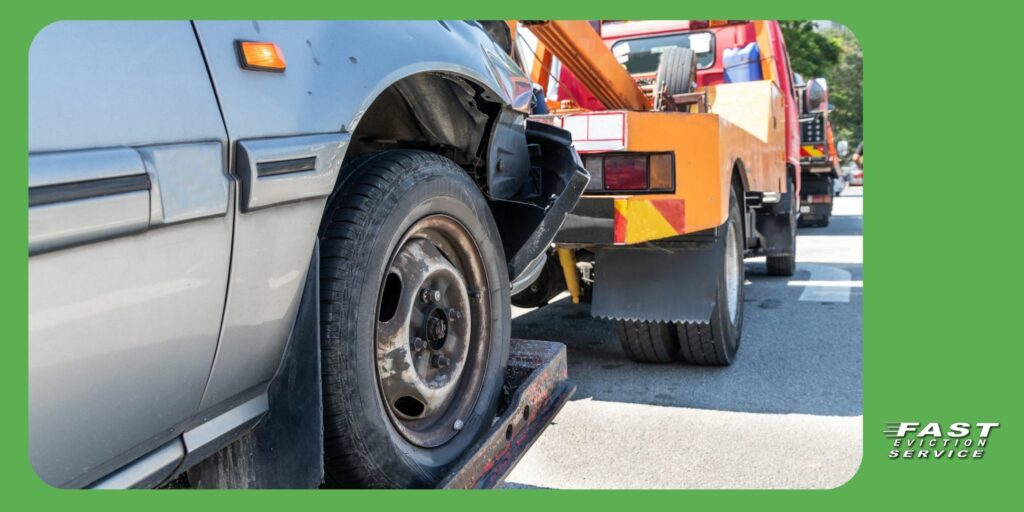
Table of Contents
- Understanding Landlord Towing Rights in California
- When a Landlord Can Legally Tow a Vehicle
- Signage Requirements for Private Property Towing
- Notice and Waiting Period Rules
- Special Rules for Inoperable or Abandoned Vehicles
- Property Size and Onsite Management Requirements
- Written Authorization and Documentation
- What Happens During a Tow in Progress
- Post Tow Notification Requirements
- Landlord Liability and Common Compliance Mistakes
- Best Practices for California Rental Property Owners
- Local Ordinances and Additional Considerations
- Conclusion
Understanding Landlord Towing Rights in California
Landlord towing rights in California are governed primarily by California Vehicle Code section 22658. This law balances a property owner’s right to control private property with protections for vehicle owners. For landlords, the key takeaway is simple, towing is allowed, but only when the statute is followed exactly.
California does not allow blanket or automatic towing authority. Each tow must be justified, documented, and properly authorized. Landlords who skip steps or rely on towing companies to handle compliance often find themselves responsible for penalties and damages.
When a Landlord Can Legally Tow a Vehicle
A California landlord may remove an unauthorized or abandoned vehicle from private rental property only under specific circumstances. These situations typically include posted parking restrictions, extended violations after notice, inoperable vehicles, or serious safety concerns.
The most common lawful scenarios involve clearly posted signage or vehicles that remain parked illegally after receiving a notice and waiting the required period. Immediate towing is limited to serious safety or access violations, such as blocking entrances or fire lanes.
Signage Requirements for Private Property Towing
Proper signage is one of the most critical compliance requirements. If signage is missing or incorrect, the tow may be unlawful even if the vehicle clearly violates parking rules.
California law requires signs to be posted at each entrance to the property, clearly visible to drivers. The sign must state that public parking is prohibited, that unauthorized vehicles will be towed at the owner’s expense, and include the telephone number of the local traffic law enforcement agency. The sign must meet minimum size and lettering requirements, which landlords should verify carefully.
Without compliant signage, landlords generally cannot tow a vehicle unless another qualifying condition applies.
Notice and Waiting Period Rules
In many cases, landlords must provide notice before towing. If a vehicle receives a parking violation notice, at least 96 hours must pass before the vehicle can be removed. This waiting period gives the vehicle owner an opportunity to correct the violation.
Landlords should document when the notice was issued and ensure the full waiting period has elapsed. Towing too early is one of the most common compliance mistakes and can lead to financial penalties.
Special Rules for Inoperable or Abandoned Vehicles
Vehicles that appear abandoned or incapable of safe operation are treated differently under California law. If a vehicle lacks major components such as an engine, wheels, doors, or windshield, a landlord may initiate removal after notifying local traffic law enforcement and waiting at least 24 hours.
This process still requires documentation and coordination. Simply assuming a vehicle is abandoned is not enough. The required notification and waiting period must be observed.
Property Size and Onsite Management Requirements
California towing rules change depending on the size of the rental property and whether there is onsite management.
For properties with sixteen or more units, or where an owner or manager is onsite, the landlord or manager must authorize the tow in writing and be present on the property at the time of the tow. Presence does not require standing next to the vehicle, but the authorized person must be onsite.
For properties with fifteen or fewer units and no onsite management, tenants may verify parking violations for their assigned spaces. The tenant’s request must be documented, and the landlord or manager must provide that verification to the towing company within the required timeframe.
Written Authorization and Documentation
Every tow from private property must be supported by written authorization. This document must identify the vehicle, the person authorizing the tow, the legal grounds for removal, and the relevant observation and authorization times.
Landlords should treat this paperwork as essential risk protection. In the event of a dispute, missing or incomplete authorization documents can quickly shift liability to the property owner.
What Happens During a Tow in Progress
California law allows a vehicle owner to stop a tow that is already in progress by immediately moving the vehicle to a lawful location. If the vehicle has already been connected to the tow truck or lifted, the towing company may charge up to half of the normal towing fee.
Landlords should be aware of this rule and avoid escalating conflicts during a tow. Clear communication and proper documentation reduce disputes at this stage.
Post Tow Notification Requirements
After a vehicle is towed, two separate notifications are required. First, the property owner or manager must notify local traffic law enforcement within one hour of authorizing the tow. Second, the towing company must provide written notice identifying the vehicle, the reason for removal, and where the vehicle is stored.
Failure to complete either notification properly can expose landlords to penalties, even if the initial tow was otherwise justified.
Landlord Liability and Common Compliance Mistakes
Improper vehicle removal can result in serious consequences. California law allows vehicle owners to seek multiple times the towing and storage charges if requirements are violated. Landlords may also be responsible for damage caused by improper authorization or negligence.
Common mistakes include relying on towing companies for compliance, missing signage requirements, skipping waiting periods, or failing to keep proper records.
Best Practices for California Rental Property Owners
Landlords can reduce risk by maintaining compliant signage, documenting every step of the towing process, and reviewing parking rules regularly. Lease agreements should clearly define parking rights and restrictions, which supports enforcement when violations occur.
Working with towing companies that understand California landlord towing laws is helpful, but ultimate responsibility remains with the property owner or manager.
Local Ordinances and Additional Considerations
Cities and counties in California may impose additional requirements beyond state law. Landlords should always confirm whether local ordinances add notice, signage, or procedural obligations before authorizing a tow.
Conclusion
California landlords have the legal right to control parking on their rental properties, but vehicle removal must be handled carefully. By following the step by step requirements for signage, notice, authorization, and notification, landlords can address unauthorized and abandoned vehicles while minimizing legal exposure. Compliance is not optional, but with proper planning, it is manageable.