Residential & Commercial Evictions | You are represented at all times by one of our California Eviction Attorneys | 1-800-686-8686 | intake@fastevict.com | Se habla español

After the Eviction: How California Landlords Can Recover Unpaid Rent and Damages

An eviction may return possession of your rental property, but what happens to the unpaid rent, property damage, and other expenses your former tenant leaves behind?
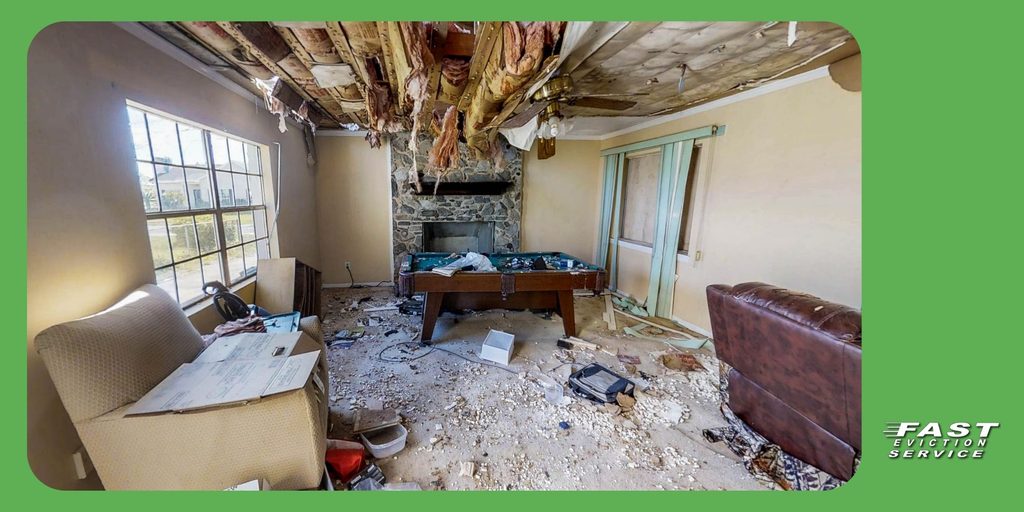
For California landlords, getting the property back is often the immediate priority. However, the financial impact of a difficult tenancy does not necessarily end when the tenant moves out. Months of unpaid rent, extensive repairs, cleaning expenses, and court costs can leave property owners facing thousands of dollars in losses.
The good news is that California law provides several potential ways for landlords to pursue money owed by former tenants. The challenge is understanding what can legally be recovered, how to document those losses, and what steps may be necessary to turn an outstanding balance into a collectible judgment.
If you are researching recovering unpaid rent after eviction in California, understanding the difference between regaining possession and recovering money is an important place to start.
Key Takeaways
- Eviction and debt collection are separate processes. Winning an eviction does not necessarily mean the landlord has received a monetary judgment or collected unpaid rent.
- California landlords may be able to recover unpaid rent and qualifying property damages. The amount depends on the rental agreement, supporting documentation, applicable law, and any previous court awards.
- Security deposits must be properly accounted for. California generally requires an itemized statement and return of any remaining deposit within 21 calendar days after the tenant vacates.
- Documentation matters. Rental ledgers, photographs, inspection reports, invoices, and court records can help establish the amount owed.
- A monetary judgment does not guarantee payment. Collecting a judgment may require additional legal procedures, and the former tenant’s financial circumstances can affect recovery.
- Not every outstanding balance is worth pursuing. Landlords should consider the amount owed, potential expenses, available evidence, and realistic collection opportunities.
Table of Contents
- Does Winning an Eviction Mean the Tenant Must Pay?
- What Financial Losses Can California Landlords Recover?
- Step 1: Document the Property After the Eviction
- Step 2: Properly Account for the Security Deposit
- Step 3: Determine Whether You Already Have a Money Judgment
- Step 4: Understand California Landlords’ Recovery Options
- Step 5: How California Judgment Collection Works
- Is Pursuing Former Tenant Debt Worth the Cost?
- Common Mistakes California Landlords Should Avoid
- Frequently Asked Questions
- Conclusion: Recovering Possession Is Only One Part of the Process
Does Winning an Eviction Mean the Tenant Must Pay?
One of the most common misunderstandings among California landlords is assuming that winning an eviction means the court has automatically ordered the former tenant to pay everything owed.
In reality, an unlawful detainer case primarily concerns the landlord’s right to regain possession of the rental property. Although monetary relief may be included, it is important to distinguish between the different types of judgments.
Possession-Only Judgments vs. Monetary Judgments
A possession-only judgment establishes the landlord’s right to recover the property. If the tenant does not leave voluntarily, the landlord can use the appropriate court process to have the sheriff restore possession.
A monetary judgment, on the other hand, establishes that the defendant owes a specified amount of money.
Depending on the circumstances, a landlord may obtain a judgment for possession and money together, or obtain possession first and pursue monetary relief afterward.
For example, imagine a landlord whose tenant owes $6,000 in rent. The landlord obtains a possession-only judgment, and the sheriff eventually restores possession. The landlord now has the property back, but that possession judgment does not, by itself, award the $6,000.
The California Courts’ guidance on unlawful detainer default judgments explains the different judgment options, including circumstances where a landlord can request a money-only judgment after obtaining possession.
Why a Court Judgment Does Not Guarantee Payment
Even when a landlord receives a monetary judgment, collecting the money may require additional action.
The court determines the amount owed, but it generally does not locate the former tenant’s assets or automatically transfer money to the landlord.
A former tenant might lack collectible income, have limited assets, or possess funds protected by California exemption laws.
This means a landlord could have a legally enforceable judgment without immediately receiving payment.
Can Landlords Pursue Additional Monetary Claims?
Potentially, yes.
The available procedure depends on the original eviction complaint, the judgment entered, the nature of the claimed losses, and other case-specific circumstances.
In certain default unlawful detainer cases, a landlord who obtained possession first may subsequently request a money judgment within that proceeding. Other claims, particularly some property damage claims discovered after the tenant vacates, may require a separate civil action.
The important point is that landlords should understand exactly what their existing judgment covers before deciding how to pursue any remaining balance.
What Financial Losses Can California Landlords Recover?
A former tenant’s outstanding balance may involve more than missed rent payments. Depending on the circumstances, California landlords may have several categories of potentially recoverable losses.
Unpaid Rent and Other Qualifying Lease Obligations
Unpaid rent is often the largest financial loss associated with an eviction.
Consider a rental property with monthly rent of $2,400. If the tenant stops paying for three months, the unpaid balance reaches $7,200 before considering any other expenses.
Landlords may be able to pursue rent that became due during the tenancy and other amounts legally recoverable under the rental agreement.
However, not every fee listed in a lease is automatically enforceable. Charges must comply with applicable California law, and special restrictions may apply to certain types of rental debt.
Landlords should also distinguish unpaid rent from other damages, such as losses associated with an early lease termination. These may be subject to different legal requirements, including applicable duties to mitigate losses.
Property Damage Beyond Normal Wear and Tear
Property damage can significantly increase the financial impact of an eviction.
Imagine entering a rental property after the sheriff has restored possession and discovering broken interior doors, damaged cabinetry, stained carpeting, and holes in several walls.
Some of these conditions may support a claim against the former tenant, but landlords must distinguish actual tenant-caused damage from ordinary deterioration.
Normal wear and tear generally includes deterioration resulting from reasonable, everyday use of a rental property.
Examples of potentially recoverable damage include broken fixtures caused by misuse, significant unauthorized alterations, or substantial damage to flooring beyond ordinary use.
By contrast, minor scuffs, ordinary carpet wear, and fading paint associated with normal occupancy generally should not be treated as tenant-caused damage.
Landlords should also consider the age and prior condition of damaged items. Replacing an older item with a brand-new one does not necessarily justify charging the tenant its full replacement cost.
Cleaning and Restoration Expenses
California landlords may be able to recover reasonable cleaning expenses when necessary to restore a rental unit to the level of cleanliness that existed at the beginning of the tenancy.
For example, substantial accumulated grease, excessive debris, or unusually dirty appliances may justify cleaning expenses when supported by appropriate evidence.
However, landlords cannot simply impose a standard cleaning charge regardless of the property’s actual condition.
Cleaning expenses should reflect the work reasonably necessary and should be documented through photographs, invoices, or other appropriate records.
Court Costs, Attorney Fees, and Interest
Depending on the circumstances, certain court costs, attorney fees, and interest may also be recoverable.
These amounts are not automatic. Their availability depends on the governing law, applicable contractual provisions, the court’s orders, and the nature of the claim.
Landlords should avoid assuming that every expense associated with an eviction can be added to a former tenant’s debt.
Similarly, landlords must account for payments already received, amounts applied from the security deposit, and sums previously awarded or collected.
The objective is to establish a supported, legally recoverable balance, not simply to total every expense associated with a difficult tenancy.
Step 1: Document the Property After the Eviction
Once possession has been lawfully restored, documenting the property’s condition should be one of the landlord’s first priorities.
The condition of the unit may change quickly once cleaning crews and contractors begin working. Without reliable documentation, it can become more difficult to demonstrate which damage existed when the former tenant surrendered possession.
Photograph the Property Before Beginning Repairs
Take clear photographs of each room, including walls, flooring, appliances, cabinets, bathrooms, doors, and fixtures.
When damage is present, capture both wide-angle photographs showing its location and close-up photographs showing the condition.
For example, if a bathroom vanity has been damaged, a wide photograph can establish where the vanity is located, while close-up images can show the extent of the damage.
Preserve the original photographs when possible, including their dates and other available metadata.
A written inspection report can provide additional context, particularly when it describes the condition of individual rooms and identifies repairs that may be necessary.
Understand California’s Photographic Documentation Requirements
California strengthened its security deposit documentation requirements in 2025.
Under California Civil Code Section 1950.5, beginning April 1, 2025, landlords generally must photograph the rental unit within a reasonable time after possession is returned, before performing repairs or cleaning for which they intend to make security deposit deductions. They must also photograph the unit after that work is completed.
For tenancies beginning on or after July 1, 2025, landlords must photograph the unit immediately before or at the beginning of the tenancy.
These requirements help establish the property’s condition at relevant points during the rental relationship. The statute also includes requirements concerning the availability and delivery of supporting photographs.
Preserve Rental Ledgers, Invoices, and Communications
Photographs are only one part of a strong documentation file.
A landlord pursuing unpaid rent after a tenant moves out should also preserve the rental ledger showing charges, payments, credits, and the outstanding balance.
For property damage, useful records may include move-in inspections, move-out inspections, contractor estimates, paid invoices, receipts for materials, and communications regarding the condition of the property.
If a repair requires replacing an item, documentation of the original item’s age and condition may help establish a reasonable claim.
Organizing these records while the details are still fresh can make a substantial difference if the amount owed is later disputed.
Separate Ordinary Wear From Tenant-Caused Damage
A landlord’s repair expenses and a tenant’s legal responsibility are not always identical.
Suppose a landlord replaces ten-year-old carpeting after an eviction. If the carpet was already near the end of its useful life, charging the former tenant for entirely new carpeting may overstate the recoverable loss.
Alternatively, if relatively new carpeting was severely damaged by misuse, the landlord may have a stronger basis for seeking compensation.
The California Department of Real Estate’s California Tenants guide discusses security deposit deductions, ordinary wear and tear, and related landlord responsibilities.
The key is to document the condition accurately and distinguish necessary repairs from routine turnover expenses.
Step 2: Properly Account for the Security Deposit
Before calculating how much a former tenant still owes, California landlords must properly account for the security deposit.
A security deposit can offset certain legally permissible expenses, but it is not an unrestricted fund that the landlord may automatically keep after an eviction.
California’s 21-Calendar-Day Requirement
California Civil Code Section 1950.5 generally requires landlords to provide an itemized statement of deductions and return any remaining security deposit within 21 calendar days after the tenant vacates.
The statement should identify the deductions and the amounts charged. Applicable requirements also govern supporting invoices, receipts, photographs, and the manner in which documentation is provided.
The statute contains procedures for certain situations in which repairs cannot reasonably be completed, or supporting documents are unavailable, within the initial 21-day period. These may involve good-faith estimates followed by additional documentation within specified deadlines.
Landlords should treat this deadline as an important part of the post-eviction process, even when they believe the former tenant owes substantially more than the deposit.
What Can Be Deducted From a Security Deposit?
California law permits security deposits to be applied toward certain qualifying obligations, including unpaid rent, necessary cleaning, and repairs for tenant-caused damage beyond ordinary wear and tear.
However, deductions must be reasonable and supported by the facts.
For example, if a tenant leaves a rental unit with significant damage to a kitchen countertop, the landlord may be able to deduct the reasonable cost of addressing that damage.
If the countertop was already damaged before the tenancy, the landlord generally cannot charge the former tenant for correcting that preexisting condition.
Calculating the Remaining Balance
Consider a landlord who regains possession of a property after an eviction and documents the following expenses:
| Expense | Amount |
| Unpaid rent | $3,500 |
| Qualifying property damage | $1,800 |
| Qualifying cleaning expenses | $400 |
| Total claimed expenses | $5,700 |
| Security deposit applied | -$2,000 |
| Potential remaining balance | $3,700 |
In this example, the security deposit reduces the potential outstanding balance to $3,700.
That does not automatically establish that the former tenant legally owes the entire amount. Each expense must be supported, permissible, and properly accounted for.
Nevertheless, an accurate calculation gives the landlord a clearer picture of the potential financial claim.
Step 3: Determine Whether You Already Have a Money Judgment
Before pursuing collection efforts, landlords should review the court documents from the eviction.
A completed eviction may have resulted in a possession-only judgment, a combined judgment for possession and money, or another court disposition.
The difference matters because it determines whether the landlord already has an enforceable monetary award.
Review the Original Eviction Judgment
Start by examining the judgment and related court records.
If the court awarded a specific amount of unpaid rent or other monetary relief, the landlord may already have a basis for pursuing lawful judgment enforcement.
If the judgment addresses possession only, additional proceedings may be necessary before certain collection remedies become available.
Possession-Only vs. Combined Judgments
California’s unlawful detainer process allows different forms of relief depending on the case.
In some default cases, landlords may obtain possession first and later request a money judgment. This approach recognizes that recovering the property may be more urgent than resolving every financial issue.
However, the amount that can be awarded through a default judgment may be limited by the relief requested in the original complaint.
A landlord who discovers additional property damage after recovering possession should not assume that those new expenses can automatically be added to the existing judgment.
When a Separate Civil Claim May Be Necessary
Some unpaid balances or damage claims may require a separate civil proceeding.
For example, if a landlord discovers substantial damage after the eviction and that claim was not included in the unlawful detainer case, a separate action may be an appropriate avenue to evaluate.
The correct process depends on the nature of the claim, the prior court proceedings, applicable deadlines, and the amount sought.
Landlords should also be careful not to pursue the same damages twice.
Step 4: Understand California Landlords’ Recovery Options
Once the outstanding balance has been documented, landlords can evaluate the legal processes potentially available to recover it.
There is no single collection method that works for every former tenant or every type of claim.
Small Claims Court for Unpaid Rent and Property Damage
California small claims court may be an option for certain unpaid rent and property damage disputes.
Generally, individuals may pursue claims of up to $12,500, while businesses and other entities generally have a $6,250 limit. Additional rules and exceptions can apply, including limits on how often larger claims may be filed.
For example, a landlord with a documented $4,000 property damage claim may consider whether small claims court is an appropriate forum.
Small claims proceedings are designed to be relatively accessible, but landlords still need to establish the basis and amount of their claim.
Winning a small claims judgment also does not automatically result in payment.
Civil Court Proceedings
Claims exceeding applicable small claims limits, or claims involving issues not suited to small claims court, may require another civil court procedure.
California distinguishes between limited and unlimited civil cases, with different procedural requirements.
These proceedings can involve additional costs, more formal rules, and potentially longer timelines.
For landlords with substantial financial losses, the amount at stake may justify evaluating these options.
Monetary Judgments in Unlawful Detainer Cases
When monetary relief is available through the existing unlawful detainer proceeding, that may be another avenue.
The landlord’s original complaint, the status of the case, and the type of judgment requested all matter.
California Courts provides guidance on possession-only, possession-and-money, and money-only default judgments.
Professional Debt Collection
Some landlords also consider working with a properly authorized collection professional or agency.
Depending on the situation, collection services may involve contacting the former tenant, seeking voluntary payment, negotiating lawful arrangements, or assisting with judgment collection.
Collection activity is subject to applicable consumer protection laws, including restrictions on harassment, misleading representations, and improper collection practices.
Using a third party does not eliminate the need for accurate records or establish that a disputed balance is legally owed.
Step 5: How California Judgment Collection Works
Obtaining a monetary judgment can be an important milestone, but it is not the final step in recovering unpaid rent or property damages.
When a former tenant does not voluntarily satisfy the judgment, California law provides several potential enforcement mechanisms.
Voluntary Payment and Settlement Arrangements
Not every judgment requires immediate enforcement proceedings.
Some former tenants may be willing to resolve an outstanding judgment through a negotiated settlement or payment arrangement.
For landlords, voluntary payment can sometimes reduce the expense and time associated with more formal collection methods.
Any arrangement should accurately reflect the amount owed, payments received, and agreed terms.
Debtor Examinations and Identifying Assets
One of the practical challenges of collecting a judgment is identifying assets or income that may legally be available to satisfy it.
California has procedures through which a judgment creditor may seek information about a debtor’s financial circumstances, including certain court-ordered examinations.
This information may help determine whether additional enforcement efforts are realistic.
However, identifying assets does not mean every asset is available for collection. California law protects certain income and property from judgment enforcement.
Wage Garnishment
Wage garnishment is a process that may allow a portion of a judgment debtor’s eligible wages to be applied toward an outstanding judgment.
Typically, this requires a valid money judgment, a writ of execution, and an earnings withholding process involving the appropriate levying officer.
California law limits the amount that may be withheld, and certain income is exempt from collection.
For landlords, wage garnishment may be relevant when a former tenant has identifiable employment and legally collectible earnings.
It is not a remedy landlords can carry out independently by contacting an employer and demanding payment.
Bank Levies
A bank levy is another potential judgment enforcement method.
Through the appropriate legal process, funds in a judgment debtor’s bank account may be subject to levy.
A writ of execution is generally required, and the sheriff or another authorized levying officer handles the levy.
Certain funds are protected, and the debtor may have rights to claim exemptions.
A bank levy is generally a one-time enforcement action rather than an ongoing authorization to collect future deposits.
Judgment Liens
In some circumstances, a landlord holding a monetary judgment may be able to establish a lien against qualifying real property owned by the judgment debtor.
A lien does not necessarily result in immediate payment. It may affect the property owner’s ability to transfer or refinance the property and can create a potential recovery opportunity.
Judgment liens involve recording and enforcement requirements, and exemptions or other liens may affect their practical value.
Judgment Interest, Expiration, and Renewal
California money judgments generally have an initial 10-year enforcement period, although important exceptions and special rules apply.
Certain qualifying judgments involving personal debt are subject to different renewal and interest provisions. Landlords should not assume that every rental-related judgment follows the same rules.
Interest may accrue on enforceable monetary judgments at the applicable statutory rate, and certain enforcement costs may be recoverable.
Landlords should track the judgment date, amounts collected, applicable interest, and relevant deadlines.
A judgment that remains unpaid may still have potential value, but its enforceability and collectibility should be evaluated separately.
Is Pursuing Former Tenant Debt Worth the Cost?
A landlord may have a legitimate financial claim without having a practical opportunity to recover the entire amount.
That distinction matters.
Consider two situations.
In the first, a former tenant owes $900, has no identifiable collectible assets, and cannot currently be located. Pursuing a judgment and enforcement may involve expenses that are difficult to justify relative to the amount owed.
In the second, a landlord has a documented $15,000 judgment against a former tenant with identifiable, legally collectible assets. The potential recovery may justify a more detailed evaluation of enforcement options.
Neither situation guarantees a particular outcome.
Landlords should consider several factors before investing additional time or money in collection efforts.
The Size of the Outstanding Balance
A larger balance may justify additional investigation or court expenses, although the amount alone does not determine whether collection is worthwhile.
The Quality of the Documentation
An organized rental ledger, supporting invoices, photographs, and court records may help substantiate the claim and reduce uncertainty.
The Cost of Collection
Filing fees, service expenses, levying officer fees, and other lawful collection costs can affect the net amount recovered.
Some collection expenses may be added to an enforceable judgment when authorized, but landlords should not assume every expense is recoverable.
The Former Tenant’s Financial Circumstances
A former tenant’s income, assets, exemptions, and financial stability can substantially affect collection opportunities.
Even a well-documented judgment may remain unpaid when no legally collectible assets or income are available.
For landlords, the most useful question is not simply, “How much does the tenant owe?”
It is also, “What is the realistic potential for recovering that amount, and what might recovery cost?”
Common Mistakes California Landlords Should Avoid
The period immediately following an eviction can be stressful. Landlords may be focused on repairing the property, finding a replacement tenant, and recovering from lost rental income.
During that process, several avoidable mistakes can complicate a potential financial claim.
Assuming the Eviction Automatically Includes a Money Judgment
A possession judgment and a monetary judgment serve different purposes.
Review the actual judgment before assuming that unpaid rent has already been awarded.
Failing to Preserve Evidence
Cleaning, repairs, and renovations can eliminate evidence of the property’s condition.
Photographs, inspections, and supporting records should be preserved before relevant conditions change.
Missing Security Deposit Requirements
The general 21-calendar-day accounting deadline and applicable photographic documentation requirements remain important even after a difficult eviction.
Failure to comply can expose landlords to disputes and potential liability.
Charging for Ordinary Wear and Tear
A landlord cannot treat routine property aging as tenant-caused damage.
Expenses should be reasonable, supported, and consistent with California law.
Counting the Same Loss More Than Once
A claim should account for security deposit deductions, rental assistance payments, other credits, and amounts previously collected or awarded.
Double-counting can undermine the accuracy of the claimed balance.
Assuming Collection Is Guaranteed
A monetary judgment establishes a legal obligation, but successful collection depends on the available enforcement procedures and the debtor’s financial circumstances.
Using Improper Collection Methods
Landlords should avoid threatening, harassing, or misleading collection practices.
Lawful recovery efforts must comply with applicable California and federal debt collection requirements.
Frequently Asked Questions
Can a California landlord collect unpaid rent after eviction?
Yes, California landlords may be able to pursue unpaid rent after an eviction. The appropriate process depends on whether the landlord already has a monetary judgment, what was requested in the unlawful detainer case, and whether an additional claim is necessary.
Can a landlord sue a former tenant for property damage?
Potentially. A landlord may be able to pursue compensation for tenant-caused damage beyond ordinary wear and tear. The claim should be supported by evidence establishing the damage, responsibility, and reasonable cost of repair.
What happens when property damage exceeds the security deposit?
If legally recoverable damages exceed the security deposit, the landlord may have a remaining financial claim against the former tenant. The landlord must still properly account for the deposit and establish the basis for any additional amount sought.
Can unpaid rent be recovered without an existing money judgment?
A landlord may be able to seek voluntary payment of a valid outstanding balance without first obtaining a judgment. However, enforcement methods such as wage garnishment and bank levies generally require an enforceable monetary judgment and additional legal procedures.
How long does a California money judgment remain enforceable?
Many California money judgments have an initial 10-year enforcement period, but exceptions apply. Certain qualifying personal-debt judgments have special renewal and interest rules. The applicable requirements depend on the judgment and governing law.
What if a former tenant has no collectible assets?
A landlord may have difficulty collecting a judgment when the former tenant lacks legally collectible income or assets. Depending on the judgment’s enforceability and the tenant’s future financial circumstances, collection opportunities may change over time.
Can landlords recover attorney fees and court costs?
Certain attorney fees, court costs, and enforcement expenses may be recoverable when authorized by applicable law, the rental agreement, or a court order. Landlords should not assume every expense can automatically be charged to the former tenant.
Can a landlord pursue unpaid rent years after the tenant moves out?
Possibly. The answer depends on the nature of the claim, applicable statutes of limitations, any existing judgment, and relevant legal exceptions. Deadlines for filing a lawsuit are different from the period during which an existing judgment may be enforced.
Conclusion: Recovering Possession Is Only One Part of the Process
Completing an eviction is often a major step forward for a California landlord. It restores possession of the rental property and creates an opportunity to make repairs, prepare the unit for a new tenant, and resume rental operations.
But the financial consequences of the previous tenancy may remain.
Recovering unpaid rent after eviction in California requires understanding what is legally owed, preserving reliable documentation, properly accounting for the security deposit, and determining whether a monetary judgment already exists.
When additional recovery is possible, landlords can evaluate the available court and collection procedures while considering the practical costs and likelihood of payment.
The most effective approach begins with accurate records, a clear understanding of the outstanding balance, and realistic expectations about the collection process.
For California rental property owners, recovering possession protects control of the property. Understanding post-eviction financial recovery can help protect the investment behind it.